Writing
When Languages Collide : The True Story of Linguistic Barter - 13 June 2026
Language is basically our collective superpower. But what is even more fascinating than just being able to speak is watching what happens when two cultures that don't understand each other decide to do business, wage war, or broker peace.
"Language contact" isn't just a peaceful cohabitation in a dictionary. It’s a playground where words mix, transform, and crash into one another, sometimes creating brand-new dialects. From the clay tablets of Mesopotamia to modern migration waves, let's dive behind the scenes of linguistic globalization.
Antiquity and the Middle Ages : The Great Mix of the First Empires
Long before modern globalization, long-distance trade and diplomacy already required finding common ground. Spoiler alert: back then, there were no instant translation apps, so people had to improvise.
Akkadian and Sumerian : The Mesopotamian Fusion
By the 14th century BCE, Akkadian was the language of diplomacy in the Near East. The famous "Amarna Letters" (over 300 clay tablets discovered in Egypt) show kings and pharaohs negotiating political alliances and marriage dowries.
The contact focus : Akkadian didn't just appear out of nowhere. It developed through intense, direct contact with Sumerian. This proximity created a unique linguistic convergence zone (a "sprachbund") where the two languages eventually aligned their grammatical structures with one another. This is one of the earliest documented cases of fusion through contact.
Aramaic: The Swiss Army Knife of the Near East
Originating in modern-day Syria, Aramaic was essentially the "Arabic of its time." It established itself as the "lingua franca" of the Assyrian and Persian Empires, serving as the essential language for business and administration.
The historical anecdote : The "Persepolis Tablets" which recorded taxes under Darius the Great, were written in Aramaic. A few years ago, thousands of these tablets which had been on loan to the United States were at the center of a major geopolitical tug-of-war before finally being returned to Iran. Proof that ancient bureaucracy can still make headlines today.
Greek, Latin, and Arabic : The Highways of Knowledge
While Greek handled trade in the Eastern Mediterranean and Latin established itself in the West as the language of law and the Church, the medieval Islamic world made Arabic the engine of science. It was through the contact between Arabic, Persian, Greek, and European scholars that mathematical and philosophical concepts traveled, growing richer with every translation.
The Early Modern Period : The Golden Age of Translators and "Sabir"
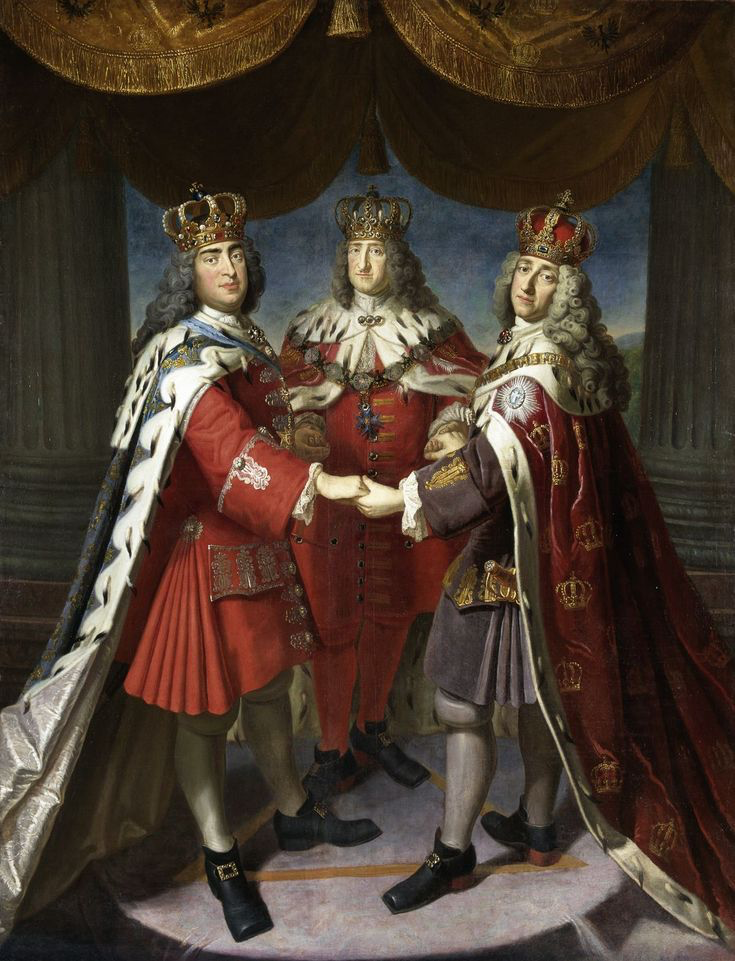
With the Age of Discovery and the explosion of maritime trade, the world suddenly became deeply interconnected. This was the exact moment when language contact became a matter of survival.
The Dragomans : The VIPs of Negotiation
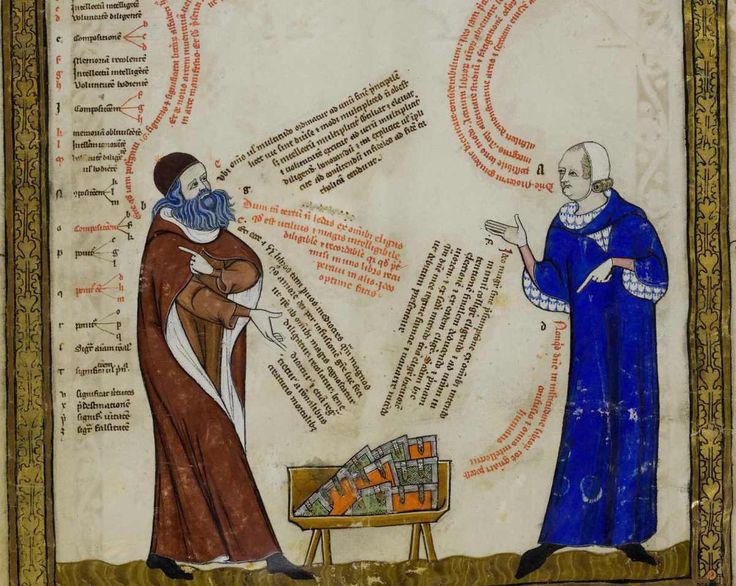
In the Mediterranean and the Ottoman Empire, doing business without them was impossible. The "dragomans" were highly skilled secretary-interpreters. They didn't just translate words; they translated cultures. A single mistranslation on their part could literally trigger a war.
The Textbook Case : The Lingua Franca (or Sabir)
The ultimate example of language contact from this era happened on ships. In the Mediterranean, Italian, Spanish, French, Turkish, and Arabic sailors created the "Lingua Franca" (or Sabir).
→ This was nobody's native language. Instead, it was a simplified pidgin based on Italian and Spanish, heavily spiced with Arabic and Turkish words. It was a 100% practical tool, born out of the strict need to communicate in order to trade and survive.
The Contemporary Era : From Colonial Empires to Tech
Today, economic power dynamics continue to reshape the global linguistic map.
Global English and the Loanword Phenomenon
Propelled by the British Empire and later by American hegemony (technological, cultural, and financial), English has become the "Globish" of modern times. But contact is a two-way street: while French purists complain about words like "woke" or "marketing", English itself is packed with French terms integrated over centuries of contact (like "lifestyle", which mimics "art de vivre", or a direct "rendez-vous").
Migration : When Languages Reshape Cities
Contact doesn't just happen through screens or peace treaties; it happens on the streets. The migratory waves of the 19th, 20th, and 21st centuries have transformed the urban landscapes of the world's major metropolises. Languages from Asia, Africa, or Latin America have taken root in industrial and cultural hubs.
This daily contact is what breathes life into modern slang (such as contemporary French, which is heavily influenced by Arabic, Romani, and English).
So, Are We Moving Forward ?
Languages are not frozen in marble. They move, travel, borrow, and merge alongside human migration. At a time when artificial intelligence claims to erase language barriers with real-time automatic translation, the core challenge remains exactly the same as it was during the era of clay tablets: understanding the person behind the words.
The scales are already shifting. The economic rise of Mandarin Chinese and Spanish, combined with the demographic vitality of Sub-Saharan Africa, are already writing the next chapters in this massive history of human contact.
Why the Internet is a Black Hole and why I keep falling into it - 13 may 2026
I was born in the 2000s. In other words, I belong to a generation that never truly experienced a world without the Internet. We grew up surrounded by it and the constant illusion of connection. The Internet was never simply a tool added to our lives, it became the environment in which our lives developed. Our relationships, our way of learning, consuming, loving, communicating, and even constructing our identities have all been shaped through it.
The Internet is often described as one of humanity's greatest technological revolutions, and in many ways, that is kinda true (even tho I think the greatest revolution was glasses to be able to see my beautiful face). It has radically transformed access to knowledge and communication. Distances seem almost meaningless now. Within seconds, we can speak to someone on the other side of the world, witness historical events in real time, discover cultures we may never physically encounter, or access information that was once reserved for privileged elites.
It has democratized speech, amplified marginalized voices, accelerated scientific collaboration, and reshaped entire economies. Today, nearly all human knowledge appears to exist just a few clicks away.
And yet despite all this progress the Internet increasingly makes me think of a black hole.
In astrophysics, a black hole is a region of space whose gravitational pull is so powerful that nothing can truly escape it not even light itself. The closer one gets to it, the more space, time, and perception become distorted. In many ways, this feels like an unsettlingly accurate metaphor for our relationship with the digital world.
The Internet absorbs everything.
Opinions, fears, desires, traumas, memories, political conflicts, trends, outrage, grief, intimacy, misinformation, entertainment, loneliness and even History itself. Every second, millions of new pieces of content appear only to disappear almost immediately into an endless stream of replacement. Nothing stays visible for long. Everything is consumed, buried, and forgotten at a terrifying speed. That also why the cancel culture never truly fully worked because our brain cannot process all this information and forget everything.
We live inside a continuous flow of stimulation where truth and falsehood coexist so closely that they often merged. The essential stands beside the trivial. A humanitarian catastrophe appears between a makeup tutorial and a meme. Serious political analysis competes for attention against thirty second videos optimized to keep us from scrolling just a little longer.
The Internet promised infinite access to information, but this abundance has created another problem entirely: the impossibility of processing meaning.
This creates a state of permanent saturation. We exist in a hyperconnected society where the individual is constantly solicited by notifications, algorithmic feeds... Our attention is fragmented into microscopic moments. We consume enormous quantities of information every day, yet increasingly struggle to process it.
Paradoxically, having access to everything can make reality feel less coherent rather than more understandable.
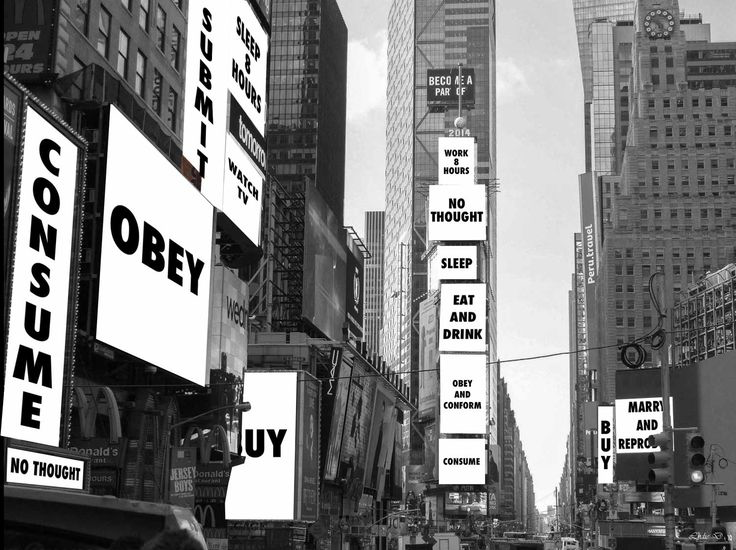
The Internet contains everything and its opposite simultaneously. Every idea can instantly be validated and destroyed within the same space. It allows extraordinary solidarity movements to emerge while also amplifying some of the most violent forms of hatred and dehumanization. Social networks connect people across continents while isolating them inside ideological, political, and emotional bubbles curated by algorithms.
As a result, the digital world often feels less like a place of collective understanding and more like a collision between millions of parallel realities.
It also reminds me of the curse of knowledge: the cognitive bias in which individuals unconsciously assume that others possess the same understanding they do. Online, this phenomenon becomes extreme. Each person navigates within their own informational ecosystem, surrounded by content that reinforces their worldview until it begins to feel self-evident. Entire communities become convinced that their interpretation of reality is simply "common sense," even when radically opposed to another group equally convinced of the same thing.
And then there is ultracrepidarianism: the tendency to speak with confidence about subjects we barely understand.
The Internet encourages this constantly. We are pushed to react immediately, comment instantly, form opinions rapidly, and publicly position ourselves on every subject imaginable. Silence online almost feels unnatural. Not participating can feel like disappearing.
But at the same time, it would be deeply elitist to argue that only highly educated or intellectually recognized individuals deserve the right to speak. This is one of the Internet's greatest contradictions: it democratizes expression while simultaneously weakening the value of discourse through the sheer excess of voices competing for visibility.
In this sense, the black hole metaphor becomes even more disturbing.
The Internet does not simply contain information it consumes attention itself. Hours disappear inside it unnoticed. Time bends there. One enters intending to search for a single thing and emerges much later having absorbed fragments of thousands of others.
Thoughts become interrupted before they fully form. Reflection is replaced by reaction.
Curiosity becomes dependency.
And perhaps the most unsettling part is that none of this feels forced.
We participate willingly.
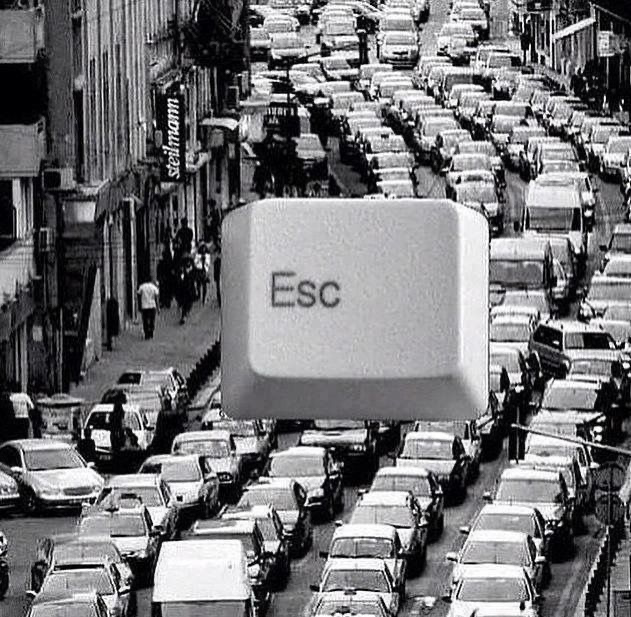
That is where my own contradiction begins.
Because while I criticize this system, I also feed it every single day. This very text contributes to the endless accumulation of digital content and my own ultracrepidarianism push by my ego. By publishing my thoughts online, I become another voice added to the infinite noise I claim overwhelms us. I criticize the black hole while actively throwing more matter into it.
And the truth is that I cannot pretend to stand outside of it.
I rely on the Internet constantly. To navigate cities. To keep in contact with people I love.
To study. To work. To distract myself from anxiety. To understand current events. To compare products before buying them. To fill moments of silence that, years ago, would simply have remained silent.
Sometimes I wonder whether we still use the Internet consciously, or whether it has become something closer to an extension of our nervous system. It follows us everywhere. Even when we are alone, we are never entirely disconnected from it.
Notifications vibrate like reflexes. Information flows continuously through our minds even in moments of supposed rest.
And maybe that is what makes this metaphor so unsettling to me.
A black hole is not dangerous because it looks frightening from afar. It is dangerous because, once inside its gravitational field, escape becomes almost impossible.
I think the Internet has reached that point in modern life.
We no longer simply use it, we orbit around it.
And sometimes, I wonder whether the human brain was ever meant to absorb this much information, this many opinions, this many emotions, and this many realities all at once.
Perhaps we were never designed to think constantly, react constantly, compare constantly, and remain permanently connected to the consciousness of millions of other people.
Yet every day, we return to the screen anyway.
Including me.
To be and or not to be an anarchist - 11 may 2026
First of all, anarchism is a political philosophy that has several interpretations. This reflection is based on a non-violent anarchism, defined by direct democracy, that is to say, power exercised by the people rather than by a political or economic elite.
When someone asks me my political side, I always reply that I am an anarchist, which is true. Yet, the doubt about this political vision is still present in me. Indeed, I think that power should belong to the people, but within certain limits. Today’s society, together with the overpopulation and complexity of the modern world, makes it difficult to apply a total anarchism. For such a system to work fully, it would be necessary in particular to make disappear capitalism and the strong economic inequalities, which seems very utopian today.
However, I still believe that a form of anarchism adapted to our time could be possible. In my opinion, democracy should be more direct and participatory. The people should vote more often on major political decisions instead of letting a minority decide for all for several years. There would be fewer deputies and it would be people from everyday life, elected according to precise criteria, neutral and transparent. The role of the president would also be severely limited in order to avoid excessive concentration of power like a part time job.
Individual freedom should remain essential, but it should always be balanced by respect for others and the collective interest, so we should educate people more politically. But that does not mean that, to vote, one would have to have a high level of education or education. Everybody can vote even people who didn't go to school and get that education.
Thus, the total absence of rules or a people who vote each law as is often believed. On the contrary, it would rather be a more horizontal society, where decisions would be taken collectively, with more social justice, transparency and citizen participation.
So yes to be an anarchist but maybe that an utopia ?
And also I am really an anarchist ? What do you think ?